NASA and IBM team up to create AI for high-resolution lunar mapping
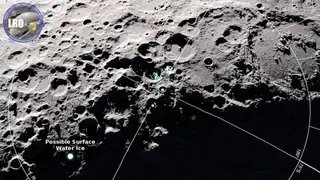
NASA and IBM have jointly developed the Lunar Foundation Model, an artificial intelligence system trained on decades of lunar observations. The model is designed to generate more precise and comprehensive maps of the moon's surface, potentially aiding future exploration and scientific studies.
The Lunar Foundation Model pairs NASA's extensive historical lunar observations with IBM's advanced machine learning capabilities. By training on decades of accumulated data, the system is designed to generate more precise and comprehensive topographical maps than existing methods. This initiative reflects a broader trend of integrating artificial intelligence into planetary science, where automated analysis of vast orbital archives can uncover subtle surface features and support future exploration planning and scientific research, though specific technical benchmarks were not detailed in the available material.
This technology could significantly benefit lunar mission planners and scientists by providing higher-fidelity terrain data, which may improve landing site selection and resource identification. Commercial space ventures and international agencies could also leverage these maps to reduce operational risks. For the broader public, more detailed lunar imagery may enhance scientific literacy and interest in space exploration. However, the model's outputs would likely require careful validation, as AI-generated maps could carry inherent biases from the training data, necessitating ongoing human oversight.