Biren's AI chip sales surge as US restrictions push Chinese firms to domestic alternatives
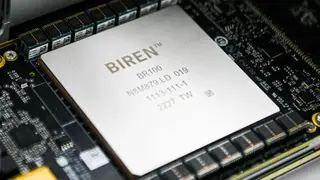
Biren Technology's first-half 2026 revenue jumped nearly 2,000% year-over-year to $183.9 million, driven by increased demand for domestic AI accelerators after US export controls limited Nvidia and AMD sales in China. Despite the growth, the company still posted a $56.2 million loss due to heavy investment in new products and software. Biren's market share remains below 3% in China's AI accelerator market.
Biren's gross margin reached 42.7%, yet it recorded a $56.2 million loss due to ongoing spending on new accelerators, rack-scale systems, and its proprietary software stack. Its product lineup includes the BR106, BR110, and BR166, with next-generation BR20X, BR30X, and BR31X in development.
Despite the surge, Biren's 2025 full-year revenue was $154.17 million, and its domestic market share remains under 3%. This contrasts sharply with Nvidia, which shipped roughly 2.2 million H20 accelerators in the first half of 2025 alone. Biren's future growth hinges on securing enough SMIC manufacturing capacity to challenge larger local rivals like Huawei and Cambricon.
Biren's rapid expansion could reshape China's AI hardware landscape, potentially reducing reliance on foreign suppliers. This shift may accelerate the development of domestic software ecosystems, but also risks fragmenting the global AI market into separate technological spheres. For Chinese enterprises, it could mean more stable access to accelerators, though performance and maturity may lag, potentially affecting AI development speed and operational costs. Meanwhile, global chipmakers might face a permanently reduced addressable market in China, influencing their future product strategies and pricing.