Reviving Pugwash: How Track-Two Diplomacy Can Tame AI Risks
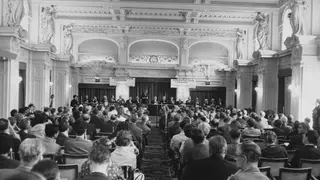
The article draws on the legacy of the Pugwash conferences, where Cold War scientists from rival nations met to assess nuclear dangers, to argue for similar informal science diplomacy today. The authors contend that track-two engagement among experts can provide vital safeguards against catastrophic risks posed by artificial intelligence. They call for renewed cross-border scientific cooperation, especially between the United States and China, to manage these emerging threats.
The 1957 gathering in Pugwash, Canada, brought together 22 scientists from 10 nations, many of whom had contributed to the Manhattan Project. Inspired by Bertrand Russell and Albert Einstein, these experts sought to appraise the perils of weapons of mass destruction, leading to over 400 symposia and a 1995 Nobel Peace Prize.
In 2026, a similar existential threat emerges from the convergence of artificial intelligence and biotechnology. Recent warnings from industry leaders highlight how AI could erode knowledge barriers for biological warfare, prompting calls for safeguards on synthetic DNA. The authors argue that track-two engagement, particularly between the US and China, is essential to manage these emerging risks.
This revival of track-two diplomacy could influence how governments approach AI governance, potentially fostering informal channels that bypass stalled formal negotiations. Scientists and policymakers in the US and China may find common ground on biosecurity safeguards, reducing the risk of catastrophic misuse. Society at large could benefit from early warning systems and shared technical standards, though the effectiveness of such informal talks remains uncertain given geopolitical tensions.