AI that mimics pathologists' visual strategies shows improved cancer detection
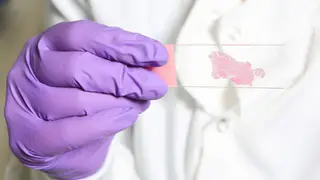
Researchers developed an AI system that learns from the visual search patterns of expert pathologists, leading to more accurate cancer detection in patient samples. The approach could enhance diagnostic tools.
Pathologists traditionally examine tissue samples under microscopes, scanning for subtle cellular abnormalities that indicate malignancy. This AI system departs from conventional computer vision approaches by modeling the gaze patterns and decision-making sequences of experienced practitioners. Rather than analyzing entire slides uniformly, the algorithm prioritizes regions the way a human expert would, potentially reducing both false positives and missed diagnoses. Such attention-guided models represent a growing trend in medical AI, where systems are designed to complement rather than replace human expertise.
This approach could meaningfully affect diagnostic workflows in pathology laboratories. If validated in clinical settings, it may help under-resourced facilities where specialist pathologists are scarce, potentially improving consistency in cancer screening. However, integration would require careful calibration against existing diagnostic standards, and clinicians may need training to interpret AI-assisted findings. The technology's ultimate value depends on demonstrating real-world reliability across diverse patient populations.