Cat grooming behavior reveals complex social motives beyond simple affection
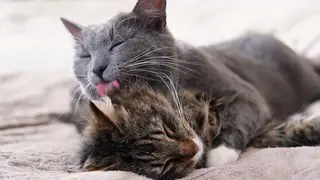
Cats engage in allogrooming, or licking each other, for reasons that may include social bonding and tension reduction. Research on free-roaming and household cats shows that aggressive interactions occur in about a third of grooming sessions, suggesting it can also serve to defuse conflict. A recent study of two-cat households indicates the behavior's function varies by situation, rather than being a straightforward sign of friendship.
The article notes that allogrooming research has evolved from viewing it as simple affection to recognizing its complexity. A 1998 study of 25 cats in an indoor-outdoor enclosure found aggressive behavior in about 35% of grooming sessions, suggesting it may defuse tension rather than express friendship.
More recent work by Morgane Van Belle at Ghent University analyzed 53 two-cat households, finding that grooming serves different functions depending on context — strengthening bonds, signaling play, or acting as an appeasement gesture. Ear-licking appears particularly common, possibly because that area's sensory nerve endings promote relaxation, a calming effect also observed in horses and monkeys.
This research could help cat owners better interpret their pets' interactions, potentially reducing misunderstandings that lead to unnecessary interventions. Understanding that grooming may signal tension rather than affection could also inform veterinary and shelter practices for managing multi-cat environments. However, the findings remain observational, and broader societal impact may be limited to pet-care communities.