Retro Game Runs on Low-Power Microcontroller at Playable Resolution
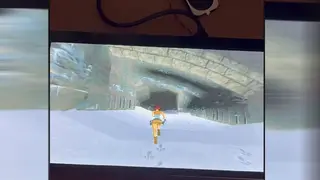
A developer demonstrated Tomb Raider running on an Espressif ESP32-P4 microcontroller, which costs under $25 and consumes about 1 watt. The dual-core 400 MHz chip achieved a playable 1,024 x 600 resolution using the OpenLara engine. This showcases the growing capability of low-power microcontrollers for gaming.
The ESP32-P4 represents a notable step up from earlier ESP32 parts, pairing dual 400 MHz RISC-V cores with AI instruction extensions, an FPU, DSP, and an integrated ISP. Its 64MB PSRAM and 768KB SRAM give developers far more headroom than typical microcontroller budgets, which historically demanded extreme code efficiency. The demo runs OpenLara natively at 320 x 240, then relies on the chip's pixel processor to scale output to 1,024 x 600 on a small LCD, with stereo audio handled by an onboard ES8311 codec and input via USB keyboard. Other recent ESP32 projects include a retro Mac emulator, a tiny ad-blocking dongle, and a 28.9-million-parameter LLM running on a $10 ESP32-S3, showing the family's widening range.
This demonstration could signal a broader shift in how hobbyists and educators approach embedded computing, as sub-$25 boards now handle tasks once reserved for full PCs. It may lower barriers for retro-gaming preservation and DIY hardware projects, potentially inspiring a new wave of low-power, portable gaming devices. However, the practical impact on mainstream consumers is likely limited, since most gamers already own far more capable hardware. The real significance may be in training and prototyping, where cheap, efficient chips let more people experiment with interactive software without significant cost or energy demands.