BRICS leaders adopt New Delhi Declaration, sidestep direct criticism of US
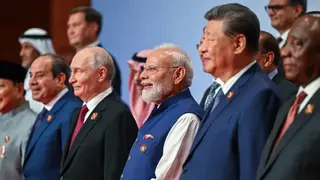
The 11-member BRICS bloc adopted a joint declaration at its summit in New Delhi, calling for restraint in the Middle East but avoiding explicit condemnation of US-Israeli strikes on Iran or Iran's actions against Gulf states. The declaration also criticized unilateral tariffs without naming the United States, reflecting divisions among members over the Iran and Ukraine conflicts.
The New Delhi Declaration represents a diplomatic balancing act for the 11-member bloc, which includes nations with conflicting interests in the Iran and Ukraine conflicts. While the declaration expressed concern over Middle East escalation and urged maximum restraint, it deliberately omitted explicit references to the US, Israel, Iran, or Gulf states. Similarly, criticism of unilateral tariffs stopped short of naming Washington, reflecting members' bilateral trade relationships.
BRICS, founded in 2006 by Brazil, Russia, India, and China, has expanded to include South Africa, Egypt, Ethiopia, Iran, the UAE, Saudi Arabia, and Indonesia. The bloc represents nearly half the world's population and roughly 40 percent of global GDP. Modi emphasized that BRICS should not be viewed as an anti-Western project, positioning the Global South as future "rule-shaper" in global governance.
The declaration's deliberate vagueness could signal that BRICS members prioritize economic cohesion over geopolitical alignment, potentially reshaping how middle powers navigate US-China-Russia tensions. Nations in the Global South may view the bloc as a viable alternative forum for trade and governance reform, though the lack of consensus on major conflicts could limit its credibility as a unified diplomatic force. The outcome may influence future multilateral negotiations.