Quantum computer integrated with electron microscope to extract more data
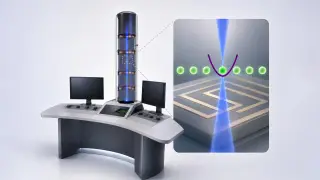
Scientists propose linking an electron microscope to a quantum computer to capture quantum information from each electron, beyond simple counting. This could allow clearer imaging with fewer electrons, protecting fragile biological samples. A prototype is being built at TU Wien.
The technique uses trapped ions positioned along the electron beam path. As electrons pass through, they become entangled with these ions, allowing quantum information from each electron to be stored and processed. The quantum computer then combines data from multiple electrons through carefully designed operations, extracting maximum signal strength from a relatively small number of particles.
The collaboration spans multiple Austrian institutions, including TU Wien, the University of Vienna, JKU Linz, and the University of Innsbruck. The processing algorithms were developed with Johannes Kofler's team at JKU Linz. A prototype is currently under construction at TU Wien, with the goal of enabling atomic-scale imaging of delicate biological samples that would be damaged by conventional high-electron-dose microscopy.
This approach could significantly reduce the electron dose needed for high-resolution imaging, potentially benefiting biomedical research where fragile samples like individual proteins are currently difficult to study without damage. It may also accelerate materials science investigations requiring nanoscale detail. However, the technology remains in early prototype stages, and practical application could take years. The primary impact would be on researchers in biology, medicine, and materials science, potentially enabling new discoveries in these fields.