JWST's exomoon search yields null result but proves technique works
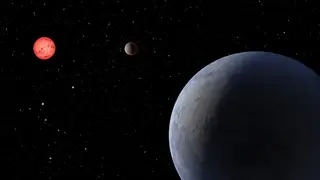
A new analysis led by David Kipping shows that the James Webb Space Telescope can detect small exomoons through repeated transit observations, despite noise from stellar activity and instrument effects. The study ruled out moons larger than 0.1 Earth radii around the exoplanet LP 890-9 c, demonstrating the method's sensitivity. While close-in planets may not retain such moons, the result validates JWST's capability for future exomoon hunts.
The study leveraged twelve separate transits of LP 890-9 c, a technique that averages out slow “red noise” from detector drift, temperature changes, and stellar sunspots. One noisy transit, when combined with a clean one, dramatically improved sensitivity. The null result—no moons larger than 0.1 Earth radii—marks the most sensitive exomoon search to date, though tidal forces from the star likely strip or destroy any such moons over time.
This proof-of-concept validates JWST’s repeated-observation strategy for future hunts. By targeting planets where moons could persist, such as those farther from their stars, the telescope may finally detect an exomoon. The method’s success despite a null result underscores that absence of evidence here is not failure, but calibration.
This result could reshape how astronomers allocate JWST observing time, prioritizing repeated transits over single looks. It may also temper public expectations about imminent exomoon discoveries, while reinforcing that null results are scientifically valuable. For planetary scientists, the technique offers a pathway to test moon-formation theories around diverse exoplanets, potentially informing habitable-zone assessments. Society benefits from a clearer, evidence-based picture of how common moons—and their potential to host life—might be beyond our solar system.