Community optimization cuts FSR 4 processing time nearly in half on AMD's BC-250
Modders have reduced FSR 4 upscaling time on AMD's RDNA 2-based BC-250 APU from 11.51 ms to 5.92 ms at 1440p. The new portable FidelityFX DLL achieves byte-identical output while using a more efficient instruction path. Performance gains also apply at 4K and 1080p resolutions.
The BC-250's RDNA 2 architecture lacks the dedicated machine-learning hardware that FSR 4 typically expects, forcing the upscaler's integer operations through slower fallback paths. The community's earlier Mesa-based fix restructured those operations using signed 24-bit arithmetic, shrinking a representative shader from roughly 64,000 instructions to about 37,600. Packaging that work into a portable DLL now lets users apply the optimization without replacing their entire graphics stack.
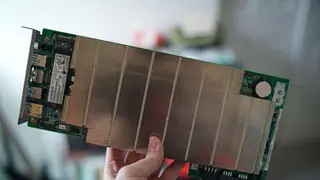
The board itself emerged from the cryptocurrency boom, pairing six Zen 2 cores with 24 RDNA 2 compute units. After mining demand collapsed, these units appeared on the second-hand market for under $150, and hobbyists built a full Linux gaming ecosystem around them — custom firmware, cooling solutions, and driver tweaks. The new DLL extends that ecosystem's reach, though Windows support and frame generation remain untested.
The optimization could make budget gaming hardware more viable for users who cannot afford current-generation GPUs. By halving the compute cost of FSR 4 on older RDNA 2 silicon, the work may extend the practical lifespan of affordable second-hand boards, potentially widening access to upscaled gaming at 1440p. However, the impact remains limited to a niche community, as the BC-250's unusual origins and Linux-only testing mean mainstream adoption is unlikely in the near term.