Designers Debate Whether to Preserve or Replace Historic Bathrooms
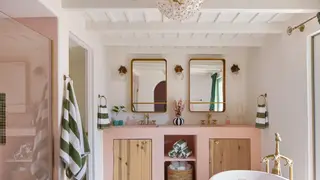
Vintage bathrooms have become a social media fascination, but modern fixtures offer better efficiency, sparking a debate among designers. Some advocate for preserving original features when the property has historical significance, as seen in a restored 1930s Palm Springs bathroom. Others suggest a middle ground, keeping the spirit of the era while updating function.
The debate reflects a broader tension in preservation work: original plumbing can remain functional for decades, as demonstrated by the Palm Springs project where the 1930s infrastructure required no replacement. Designers are increasingly finding that selective intervention—refinishing surfaces, sourcing period-appropriate fixtures, and matching original vanity proportions—can satisfy both historical integrity and modern usability. The article also notes that major manufacturers are responding to this interest by reintroducing heritage color palettes, suggesting the preservation impulse has commercial momentum beyond bespoke restoration projects.
The two case studies illustrate different approaches: one prioritizing authentic vintage sourcing, the other emphasizing sympathetic adaptation. Both projects avoided full gut renovations, instead working with existing bones—original tile, paneling, and layout—while upgrading only what was visibly worn. This middle path appears to be gaining traction among designers who view historic homes as having intrinsic character worth maintaining.
This debate could influence how homeowners approach renovations in older properties, potentially shifting decisions away from complete gut remodels toward more nuanced preservation strategies. It may affect the resale value of historic homes, as buyers increasingly weigh character against efficiency. The trend could also impact the fixture industry, as manufacturers respond to demand for heritage-inspired designs. Ultimately, the conversation may encourage more thoughtful, context-sensitive approaches to home improvement that balance aesthetic legacy with practical needs.