AI data center boom hinges on steep productivity gains to avoid collapse
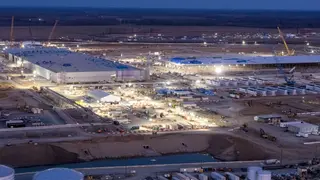
A Wharton finance professor's analysis shows that major tech companies building AI data centers will need to boost their productivity by 2.7 times by 2030 to justify nearly $1.1 trillion in projected spending. If they fail to meet these profit targets, they risk defaulting on debt and facing bankruptcy, potentially making this the largest capital misallocation in history. The industry is currently on track to spend about $750 billion this year on infrastructure.
The analysis centers on a stark revenue gap: hyperscalers (Alphabet, Microsoft, Amazon, Meta, Oracle) are projected to spend roughly $750 billion this year, with total AI capital outlays possibly exceeding $5 trillion over four years, while current AI revenues sit between $150-200 billion annually. To justify this, earnings must grow 2.7-fold by 2030, a pace comparable to the 1990s IT boom but compressed into a few years.
The financial structure adds fragility. These firms have begun heavy borrowing, and failure to meet profit targets would trigger missed interest payments and potential bankruptcy, which Wachter calls the largest capital misallocation in history. Uncertainty remains over compute efficiency, demand slowdowns, or shifts to cheaper models, all of which could alter the trajectory.
The societal impact hinges on whether this investment yields productivity gains or a debt crisis. If the boom falters, widespread job losses in tech and construction could occur, and pension funds or banks exposed to corporate debt may suffer. Conversely, if productivity surges, consumers could see cheaper, more capable AI services and broader economic growth. The outcome will shape energy demands, data center communities, and the stability of the US economy, affecting workers, investors, and everyday users alike.