Brazil's Presidential Race Fails to Address Deep-Rooted Economic and Judicial Woes
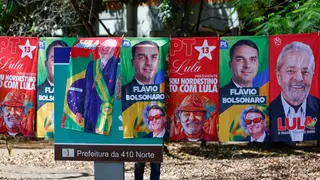
Brazil's October presidential election features incumbent Luiz Inácio Lula da Silva and challenger Flávio Bolsonaro, who offer contrasting platforms but share a record of failing to tackle the country's chronic slow growth and entrenched corruption. Analysts argue that meaningful progress would require deep fiscal reforms to lower interest rates and a fundamental overhaul of the post-dictatorship justice system, neither of which the leading candidates are proposing. The election is thus unlikely to resolve Brazil's most pressing structural challenges.
Brazil's heavy sovereign debt forces steep borrowing costs, raising investment costs and slowing growth. Unlike Chile, Colombia, and Peru, which adopted strict deficit limits after the 1980s crises, Brazil's reforms were weaker, leading to IMF assistance in 1998 and 2002. A credit boom in the early 2010s worsened deficits.
The country has repeatedly attempted reform but struggles to institutionalize it, cycling through crisis, reform, and backsliding. Politicians have often diluted or reversed past measures. A fragmented political landscape obscures accountability, making it hard for voters to link outcomes to leaders. Neither candidate proposes the deep fiscal changes or justice-system overhaul needed.
The election's failure to address structural issues could perpetuate Brazil's slow growth and entrenched corruption, affecting ordinary citizens through stagnant wages and limited public services. Investors may remain wary, keeping interest rates high and dampening job creation. The lack of judicial reform could also erode public trust in institutions, potentially fueling political cynicism. However, the outcome may still shift short-term policy, though lasting change appears unlikely without broader consensus.