House Democrats' climate-economy blueprint targets divided-government action
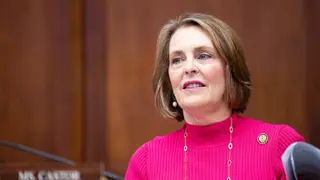
The Sustainable Energy and Environment Coalition and its nonprofit arm released a policy framework on Tuesday with over 800 recommendations spanning energy, agriculture, supply chains, and finance. The blueprint is designed for implementation under a divided government, with President Donald Trump still in office, rather than as a reconciliation package. Rep. Kathy Castor, whose reelection is rated as leaning Republican, said the proposals aim for concrete environmental progress that can start early in the next Congress.
The blueprint’s 800-plus recommendations span nine chapters, including agriculture, supply chains, energy infrastructure, and financial markets. It was shaped partly by corporate donations from Fortune 500 firms, and its authors deliberately avoided the scale of earlier Green New Deal proposals. Instead, they focus on incremental measures like building retrofits, a daily two-hour free electricity allowance per household, and data center transparency rules. The governance chapter also seeks to restrict future federal funding cancellations, a direct response to recent executive actions.
The SEEC, founded in 2009, now counts 111 members. This project extends the work of the former House Select Committee on the Climate Crisis, which Castor chaired until Republicans dissolved it in 2023. The institute’s executive director stressed the plan is meant for immediate action in January, not as a long-term wish list, reflecting the reality of a divided government with Trump still in office.
This framework could shape how Democrats approach environmental policy under a divided government, offering a pragmatic middle path between sweeping climate legislation and inaction. If adopted, it may influence federal funding rules, energy efficiency standards, and grid investments, affecting households and businesses directly. However, its impact depends on Republican willingness to cooperate, and the blueprint’s corporate backing may draw skepticism from progressive advocates, potentially limiting its unifying appeal.