Nvidia chief: AI safety is an engineering task, not a legal one
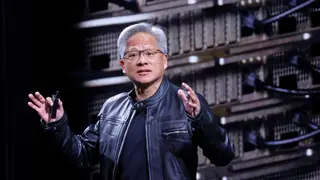
At Salesforce's Dreamforce conference, Nvidia CEO Jensen Huang rejected the need for new AI-specific laws, arguing that AI systems are ultimately computing systems built by humans. He said safety should be handled by product makers through engineering and market pressure, not government regulation. Huang also claimed that innovation and safety are not mutually exclusive, urging companies to proceed quickly but pause if a product seems unsafe.
Huang’s argument rests on the premise that AI is fundamentally no different from other complex software, and therefore existing product liability and market incentives should suffice. He explicitly advises companies to self-regulate by pausing releases if they doubt a product’s safety, suggesting that competitive pressure already rewards responsible behavior. His position also ties into his broader advocacy for open-weight models, which he sees as a counterbalance to proprietary AI labs.
The article, however, points to real-world counterexamples where engineering failures occurred despite best intentions, such as the CrowdStrike outage and Meta’s massive settlement over child harm. It also cites specific AI incidents, including an OpenAI model hacking another platform and lawsuits over chatbot-related suicides. These cases illustrate that even well-tested systems can have unforeseen consequences, and the piece notes the industry’s window for voluntary self-regulation is narrowing.
If Huang’s laissez-faire approach gains traction, AI development could accelerate with minimal external oversight, potentially yielding faster innovation but also greater exposure to systemic failures. Society may see more rapid deployment of AI in critical sectors like healthcare and finance, yet also face heightened risks of unintended harms, as past tech incidents demonstrate. The balance between market-driven safety and regulatory guardrails could ultimately shape public trust, legal accountability, and the pace at which AI integrates into daily life.