Ukrainian factory turns to solar to stay running amid Russian strikes on power grid
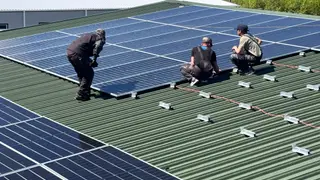
A door manufacturing facility in Bila Tserkva installed solar panels to reduce reliance on a grid frequently damaged by Russian attacks. The owner said the system will be cheaper and more independent, with government loan programs covering up to 80% of installation costs. The private supplier Yasno has completed solar installations at more than a hundred sites across the country.
Ukraine's pre-war energy system was heavily centralized, with four nuclear plants supplying more than half of the nation's electricity and fossil fuels contributing roughly a quarter. Renewables held only a small share, though solar generation had been expanding rapidly in the years before the invasion. Yasno paused installations during the first two years of the conflict, resuming in summer 2024, and has since completed projects at 117 sites with a combined capacity of 23 megawatts. The government's Affordable Loans 5-7-9 program offers businesses preferential interest rates of 5, 7, or 9 percent, covering up to 80 percent of solar installation costs.
This shift toward decentralized solar could reshape how Ukrainian businesses and communities weather ongoing infrastructure attacks, offering a model for resilience that may spread to other conflict-affected regions. Factory owners like Yaroslav may gain greater operational stability and lower energy costs, potentially protecting jobs and local supply chains. However, the transition's broader impact depends on continued government support and the availability of financing, meaning smaller enterprises without access to loans could remain vulnerable to grid disruptions.