Tampa Gardeners Seek Funds, Not Advice, to Combat Food Deserts
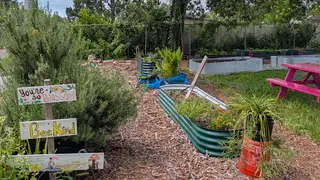
East Tampa residents have waited a decade for a supermarket, prompting community gardens like 813 Hood Garden to fill the gap in food access. Hillsborough County's food insecurity rate exceeds 15 percent, and the USDA has discontinued its national food security survey, shifting hunger mapping to nonprofits. Gardeners argue that existing programs need financial support rather than additional guidance to expand their impact.
The USDA's cancellation of its household food security survey last fall leaves a measurement gap that nonprofits now fill with their own data. Feeding America's 2026 Map the Meal Gap, based on 2024 figures, shows Hillsborough County's food insecurity rate exceeding 15 percent, with Florida's rate climbing from roughly 10 percent in 2020 to 15.4 percent in 2024.
Jaryd Hinch's peer-reviewed model, published in Southeastern Geographer, weights poverty and income above transit access and available land when identifying suitable garden locations. His analysis found 58 percent of existing Tampa Bay gardens sit in neighborhoods his model flags as highest priority—better than random placement but still leaving many high-need areas without garden coverage.
This story could shape how local governments allocate resources for food access programs. If funding follows data models rather than existing community networks, established gardens like 813 Hood Garden may struggle to expand despite proven local trust. The USDA's survey cancellation may also reduce federal accountability for hunger, shifting responsibility to under-resourced nonprofits. Residents in food deserts could see slower progress if policymakers prioritize new sites over supporting operational gardens, potentially widening the gap between mapped need and actual food distribution.