X-ray method may unlock unreadable Herculaneum scrolls
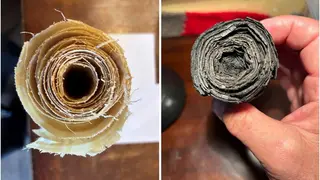
Researchers tested a combination of X-ray imaging and custom software on a replica of a scroll damaged by the Vesuvius eruption. The approach successfully revealed text, suggesting it could be applied to the real Herculaneum scrolls.
The Herculaneum scrolls, buried by Vesuvius in 79 CE, are too fragile to unroll physically. Previous attempts to read them with conventional imaging failed because the carbon-based ink offers no contrast against the charred papyrus. The new approach uses X-ray phase-contrast tomography, which detects subtle density variations in the rolled fibers, then applies custom algorithms to virtually flatten the layers and isolate the ink. Testing on a modern replica with simulated damage proved the method could resolve legible letters, raising hopes for the hundreds of intact but unreadable scrolls held in libraries.
If successful, this technique could unlock philosophical and literary works from antiquity that were thought lost forever, reshaping classical scholarship. It may also inspire broader applications for fragile, rolled documents from other volcanic or waterlogged sites. However, the impact depends on whether the real scrolls respond as the replica did; if so, historians and the public could gain unprecedented access to ancient voices, while museums and archives might face new ethical and practical questions about preserving versus revealing such artifacts.