Ancient Homeric scroll fragment unearthed inside a Dutch library volume
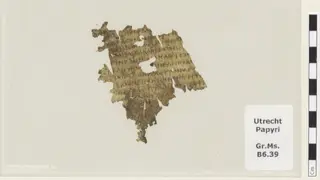
A parchment piece dating back roughly 1,700 years was found tucked between the pages of a book in a Dutch library. The fragment contains lines from Book 12 of the Odyssey, depicting Zeus's punishment of Odysseus' crew for slaughtering Helios' sacred cattle. Scholars are studying the artifact to learn more about the text's transmission in antiquity.
The fragment's discovery inside a bound volume at a Dutch library highlights how ancient texts sometimes survive in unexpected places. Its age places it within the late Roman period, a time when Homer's epics were widely copied and studied across the Mediterranean world. The specific passage — Zeus's retribution against Odysseus' crew for consuming Helios' cattle — is among the most dramatic moments in the Odyssey, and its presence on this scrap suggests the poem remained culturally central centuries after its composition.
Scholars examining the parchment hope to compare its wording against other surviving manuscripts. Variations between copies can reveal how scribes transmitted the text, whether errors crept in, and how the epic evolved across regions and generations. Each new fragment adds a data point to the complex history of Homer's reception in antiquity.
This discovery could deepen public understanding of how classical literature was preserved and transmitted. For scholars, each fragment offers a chance to refine textual histories, potentially altering how future editions of Homer are prepared. For general readers, such finds may renew interest in ancient works and the fragile processes that carried them to the present. The artifact's location — a library book rather than an excavation site — may also encourage institutions to re-examine their own holdings for overlooked treasures.