Brussels Proposes Canada as First EU Associate Member
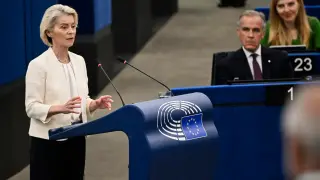
European Commission President Ursula von der Leyen suggested during her annual State of the Union address that Canada could become the European Union's first associate member, with an expanded free-trade agreement as a starting point. Canadian Prime Minister Mark Carney, present at the speech, has been lobbying for such a closer relationship for months. The proposal stops short of full EU membership and would require reimagining the bloc's partnership model.
The proposal, unveiled during von der Leyen's address, would build on the existing Canada-EU trade pact, potentially extending visa-free work and residence rights to Canadians. Collaboration could also deepen in defense, critical minerals, and AI. Carney's months-long lobbying appears to have borne fruit, with further negotiations slated for the October Canada-EU summit. Any formalization requires unanimous consent from all EU member states, a significant hurdle.
The initiative emerges against a backdrop of deteriorating transatlantic ties. Washington's recent tariffs on roughly $20 billion of Canadian goods and retaliatory measures from Ottawa have strained relations, despite bilateral trade exceeding $870 billion in 2025. Trump's repeated annexation rhetoric has pushed Canada toward Europe. However, the article notes that not all European officials are enthusiastic, suggesting internal resistance to redefining the bloc's geographic and political boundaries.
If realized, this associate membership could reshape transatlantic economic and security dynamics, offering Canadian workers and businesses unprecedented access to EU markets while giving Brussels a reliable partner outside Europe. It may also pressure other non-European allies to seek similar arrangements, potentially diluting the EU's regional identity. However, unanimous approval requirements and internal skepticism could stall the plan, leaving its societal impact—ranging from labor mobility to defense procurement—uncertain for years.