Surge in solar and wind keeps India's power-sector CO2 flat for two years
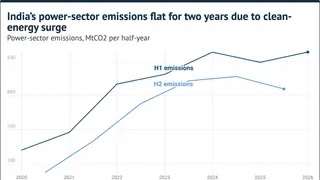
India's power-sector carbon emissions remained unchanged between the first half of 2024 and the same period in 2026, as a rapid build-out of solar and other clean sources met all additional electricity demand. This marks the first two-year stretch without growth in coal-fired generation in over five decades. Meanwhile, emissions from heavy industry such as steel and cement rose by 8% year-on-year, pushing India's total CO2 up 3.7%.
The flatlining of power-sector emissions stems from a massive solar build-out, with 77 gigawatts added in two years, covering 60% of the demand rise. This clean capacity met all of the 7% growth in electricity use, equivalent to Switzerland's total demand. Paradoxically, generators still added 8.5 gigawatts of coal, which now runs fewer hours, raising costs for consumers.
Beyond power, oil and gas consumption fell for a second year, down 7% annually, despite higher road-fuel demand. However, emissions from steel and cement jumped 8%, now representing 23% of India's total CO2, pushing overall emissions up 3.7%. Sustaining this clean-energy pace requires grid upgrades, storage, and flexible coal, while fossil-fuel investments in coal-to-chemicals and coking coal continue.
This trend could significantly reduce air pollution and associated health costs for Indian citizens, as coal plants run less. Yet, the added coal capacity may lead to higher electricity tariffs, affecting households and businesses. If grid and storage investments fail to keep pace, the clean-energy surge could stall, risking power reliability. Globally, India's flat power-sector emissions may strengthen its climate credentials, but rising industrial emissions could offset that perception, influencing international pressure and investment decisions.