Britain funds $94M high-altitude drone fleet to beam internet to remote areas
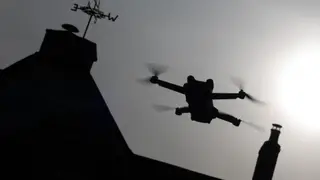
The UK's Advanced Research and Invention Agency is allocating $94 million over three and a half years to 18 projects under its Enduring Atmospheric Platforms program, aiming to deploy aircraft that can carry a 300-watt communications payload for a week. Two startups propose drone constellations covering the entire UK, while other teams are developing laser- and microwave-based wireless power systems to keep the aircraft aloft. The initiative seeks to provide an alternative to satellite internet for regions lacking terrestrial network coverage.
The program is structured across three technical tracks: foundational technology development, system integration and testing, and eventual field deployment. Among the 18 funded efforts, Menapia's Carousel concept envisions a drone constellation hovering at altitudes up to 12 miles, while VFP Aerospace proposes a relay network of roughly $67,000-per-unit aircraft that cycle back to ground stations for recharging. Wireless power delivery is a central theme, with Scalable Laser Ltd pairing ground-based laser diodes with airborne photovoltaic receivers, and Space Solar Engineering exploring microwave transmission. The University of Bath is investigating atmospheric gravity waves—vertical air movements driven by weather fronts and terrain—to extend aircraft endurance. ARIA program director Rico Chandra frames the initiative as expanding UK leadership in high-altitude platform design and manufacturing.
This initiative could reshape connectivity for rural and remote communities across the UK, offering an alternative where terrestrial infrastructure is economically unviable. If successful, the approach may also reduce reliance on foreign satellite providers, potentially lowering costs and improving service resilience. However, the technology faces significant hurdles—sustaining week-long flights and reliable wireless power transfer at scale remain unproven. The broader impact will depend on whether these experimental platforms can transition from prototype to practical, commercially viable service within the program's three-and-a-half-year window.