Ancient Russian pendant merges Christian and mythological imagery
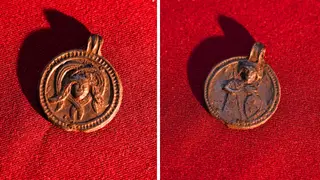
Archaeologists in northwestern Russia unearthed a two-sided pendant roughly a millennium old. One side depicts a saint slaying a snake, while the other shows a woman with serpentine hair, resembling Medusa. The find highlights the blending of Christian and pagan traditions in medieval Russia.
The pendant's dual imagery speaks to a transitional period in medieval Russia when Christian orthodoxy was still absorbing older folk beliefs. Such objects were likely worn as protective amulets, with the saint's victory over the snake offering spiritual defense while the Medusa-like figure drew on pre-Christian apotropaic traditions. Northwestern Russia, a region of active trade and cultural exchange, would have been fertile ground for such syncretism. The artifact joins a growing body of evidence that religious conversion was not a clean break but a gradual layering of new meanings onto old symbols.
This discovery could reshape public understanding of medieval Russian religious life, showing that Christian and pagan practices coexisted rather than replaced one another. Museums and educators may use such artifacts to present a more nuanced history, while scholars could revisit assumptions about the pace of conversion. For general audiences, the pendant offers a tangible reminder that cultural blending was common, potentially encouraging more thoughtful engagement with how belief systems evolve over time.