Pocket-sized $100 detector brings cosmic muon observation to all
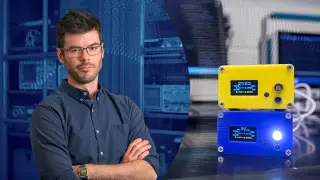
A compact device called CosmicWatch, built from components costing about $100, detects muons—secondary particles from cosmic rays that constantly pass through Earth. Originally designed for student education, the detector is now used in professional experiments, balloon missions, and potential spacecraft applications. Its low cost and portability enable broader access to studying high-energy cosmic phenomena.
The detector's origins trace to 2017, when Axani was a graduate student at MIT seeking a compact, energy-efficient muon sensor for the IceCube observatory in Antarctica. That facility, buried deep in ice, hunts neutrinos, and the muon detector was meant to complement its work. CosmicWatch's design has since proven adaptable, finding use in balloon missions and being eyed for spacecraft.
Muons carry scientific weight beyond their cosmic origins. Their measurement in the early 1940s offered one of the first experimental validations of special relativity. They also serve practical purposes on Earth, such as imaging hidden structures—in 2016, muon technology revealed an unknown corridor within the Great Pyramid of Giza. The device's low cost and portability contrast sharply with traditional detectors, which require racks of electronics the size of a small bookshelf.
This device could significantly democratize particle physics, allowing high schools, small colleges, and amateur researchers to conduct experiments previously limited to well-funded laboratories. Broader access may accelerate discovery by enabling distributed, low-cost muon monitoring networks. It could also inspire more students to pursue STEM fields through hands-on engagement with cosmic phenomena. Additionally, its portability may support practical applications in infrastructure inspection or geological surveying, though widespread adoption depends on further validation and refinement of the technology.