Rack and pinion gains edge for long-stroke motion in industrial automation
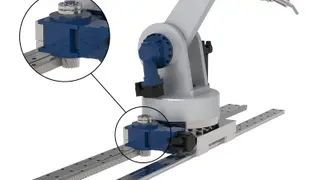
Engineers choosing linear motion systems for long travel distances often face trade-offs among rack and pinion, ball screws, and linear motors. Ball screws suffer from a whip effect beyond roughly 2-3 meters, causing vibration and potential failure, while rack and pinion can be scaled to nearly any length. Linear motors offer a flat, direct-drive alternative but may not suit all layouts or cost constraints.
Rack and pinion systems scale to nearly unlimited lengths by joining rack sections, whereas ball screws become unstable beyond roughly two to three meters due to a whip effect causing vibration and potential failure. Linear motors offer speed and precision but carry higher per-meter costs from expensive magnets and require continuous power to hold position.
Rack and pinion avoids magnetization issues, holds position without power draw when the motor stops, and typically costs less overall when factoring in gearbox and motor. These factors make it a practical choice for long-travel industrial axes.
This comparison could help manufacturers make more cost-effective choices for long-travel automation, potentially lowering production costs in industries like automotive and logistics. Facilities operating in environments with metal debris may benefit from rack and pinion's lack of magnetic attraction, reducing maintenance and safety concerns. However, engineers must weigh trade-offs carefully, as precision requirements may still favor ball screws or linear motors for certain applications.