Genetics and Diabetes Drive Early Liver Cirrhosis in MASLD
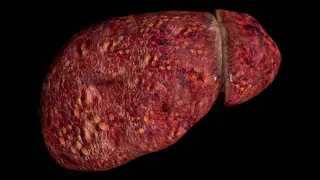
A prospective multicenter study found that 25% of MASLD-related cirrhosis cases occur before age 50, with high genetic risk scores and type 2 diabetes independently raising the odds. Patients with both factors had cirrhosis prevalence up to 10.7%, versus 2% in low-risk non-diabetics. The authors warn that standard fibrosis screening tools like FIB-4 may miss about 30% of these early-onset cases.
The study drew on 2,395 biopsy-confirmed MASLD patients from the national Nonalcoholic Steatohepatitis Clinical Research Network, of whom 9.8% had cirrhosis. Early-onset cases were defined as the lowest age quartile, under 50 years, comprising 53 patients versus 181 older patients. Genetic risk scoring combined three single-nucleotide polymorphisms—PNPLA3, HSD17B13, and TM6SF2—to stratify inherited susceptibility.
The findings highlight a screening gap: roughly 30% of early cirrhosis patients had FIB-4 scores below the standard 1.3 threshold, meaning current age-dependent tools would classify them as low-risk. A lower FIB-4 cut-point of 1.0 captured 82.7% of cases, suggesting adjusted screening thresholds could improve early detection in younger adults.
This research could reshape how clinicians identify younger adults at risk for advanced liver disease, potentially prompting earlier referrals for fibrosis assessment in patients who might otherwise be overlooked. If screening protocols shift toward lower FIB-4 thresholds or incorporate genetic testing, more patients under 50 could receive timely intervention. However, broader genetic screening carries cost and accessibility implications, and the study's predominantly white, female cohort may limit generalizability to other populations.