Largest crater ever observed forming on moon reveals far-reaching impact effects
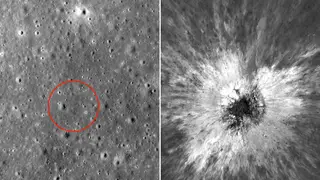
A 222-metre-wide crater named McGetchin formed on the moon in 2024, the largest impact ever witnessed in real time. Observations show the impact created a cold spot 7 kilometres wide and ejected debris more than 120 kilometres away, altering the lunar surface far beyond the crater. This provides a rare baseline for understanding cratering processes and could aid future lunar exploration.
The McGetchin crater was identified through before-and-after image comparisons from NASA's Lunar Reconnaissance Orbiter, with the impact occurring between 2024 and 2025 observations. Statistical models suggest an impact of this magnitude strikes the moon roughly once every 132 years, making the real-time observation exceptionally rare.
The impact's effects extend far beyond the visible crater. Temperature measurements revealed a 7-kilometre-wide region that runs several degrees cooler during lunar night, caused by fluffed-up dust that loses heat more quickly. Debris was scattered more than 120 kilometres from the impact site, demonstrating that cratering modifies the lunar surface across vast distances relative to crater size.
This research could reshape how scientists interpret lunar surface history, since understanding pristine crater formation provides a calibration baseline for dating and analyzing older, degraded craters across the solar system. For future lunar missions, the findings may inform landing-site selection and infrastructure planning, as the cold-spot and debris patterns reveal how impacts can alter surface properties far from the impact point. This could ultimately help protect equipment and astronauts by improving predictions of lunar surface conditions.