Longest satellite record shows glacier flow drives most ice loss in Greenland and Antarctica
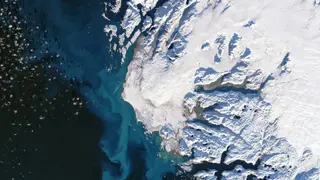
A new study extending satellite records back to 1972 finds that 84 per cent of ice loss from Greenland and Antarctica is due to glaciers flowing faster into the ocean, not surface melting. The ice sheets have lost 11.3 trillion tonnes of ice in half a century, with acceleration quadrupling since the 1980s. This insight is crucial for predicting sea level rise and understanding feedback loops.
The study's authors reconstructed glacier velocities from early Landsat 1 measurements, filling gaps to create a continuous record spanning five decades. This method allowed them to distinguish between two distinct mechanisms of ice loss: ocean-driven glacier acceleration and atmospheric surface melting. In Antarctica, surface melt is nearly absent due to extreme cold, making glacier flow the dominant factor there. In Greenland, however, both processes operate, yet flow still accounts for the overwhelming majority of loss.
The findings highlight specific feedback mechanisms that concern scientists. Thwaites Glacier in Antarctica sits on bedrock that slopes downward inland, allowing warm ocean water to penetrate beneath it as it retreats. This marine ice sheet instability could trigger runaway melting. Similarly, collapsing ice cliffs at glacier fronts may drive further retreat, creating cascading effects that are difficult to model in current sea level projections.
This research could significantly refine sea level rise projections, which directly affect coastal communities, infrastructure planning, and insurance markets worldwide. If ocean-driven glacier loss proves more responsive to warming than surface melting, current models may underestimate future flooding risks. Policymakers and urban planners may need to reassess adaptation timelines, while vulnerable island nations and low-lying cities could face accelerated displacement pressures. The findings may also influence international climate negotiations by strengthening the case for urgent emissions reductions.