Nobel Laureate David Baker Leverages AI to Engineer Novel Biological Molecules
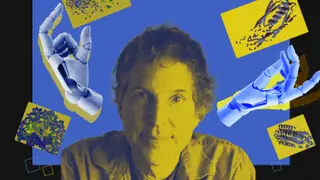
David Baker, who shared the 2024 Nobel Prize in Chemistry, is leading a new initiative called AI BioDesign that uses artificial intelligence and high-throughput lab experiments to create proteins and enzymes that do not exist in nature. The project, a collaboration between the Allen Institute, the University of Washington, and the Fred Hutchinson Cancer Center, aims to develop new medicines and industrial solutions, such as cancer treatments and plastic-degrading enzymes. Baker discussed the potential and risks of expanding biology beyond natural evolution in an interview with WIRED en Español.
David Baker, who earned the 2024 Nobel Prize in Chemistry for computational protein design, serves as chief scientific officer of AI BioDesign. The initiative unites the Allen Institute, University of Washington, and Fred Hutchinson Cancer Center. Its premise is that natural evolution has only sampled a tiny portion of chemically feasible molecular space. The project aims to build open databases, models, and tools that serve as foundational resources for future breakthroughs.
Targeted applications include novel cancer and neurodegenerative disease treatments, enzymes that degrade ocean plastics, and even biological computers. To manage risks, researchers rely on computational screening, contained lab experiments, and progressively realistic validation before any real-world use. Baker has compared the potential of this field to historic shifts like industrialization and the digital revolution.
This initiative could dramatically accelerate drug discovery and environmental remediation, potentially offering new therapies for cancer and neurodegenerative diseases while addressing plastic pollution. However, the ability to create molecules outside natural evolution may introduce unforeseen ecological or health consequences. Society could benefit from new industrial processes, but regulatory frameworks and biosafety protocols will need to evolve in tandem to ensure responsible deployment. Researchers, patients, and environmental groups are all likely to be affected by these developments.