The Sun's Final Stages: A Timeline of Its Demise
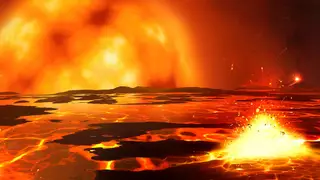
The sun's life is driven by thermonuclear fusion, converting hydrogen into helium and releasing vast energy. Over billions of years, it will expand into a red giant, likely engulfing Earth and making it uninhabitable. The process has already begun in the star's core.
The sun's core operates as a vast fusion furnace, converting roughly 600 million metric tons of hydrogen into helium each second, with about four million tons of that mass transformed directly into radiant energy. This process requires temperatures near 15 million degrees Celsius, yet the resulting helium behaves like inert ash, sinking toward the center where it accumulates over time.
As helium builds up, the core gradually contracts and heats, causing the sun's brightness to increase—already up about 30 percent since its formation 4.6 billion years ago. Within roughly a billion years, this intensifying luminosity will boil Earth's oceans and trigger a runaway greenhouse effect. About six billion years later, the sun will exhaust its core hydrogen, shifting fusion to a shell around the inert helium center.
This timeline of the sun's eventual demise could reshape public understanding of deep time and humanity's long-term place in the cosmos. While no living person will witness these events, the knowledge may influence how people think about planetary stewardship and the search for habitable worlds beyond our solar system. The article's accessible framing could also spark broader interest in stellar physics and astronomy among general readers, potentially encouraging future scientific engagement.