OpenAI's Navier-Stokes proof wows mathematicians but may not shift engineering practice soon
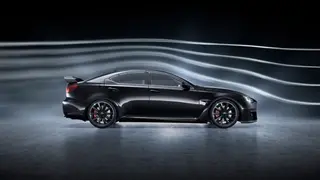
OpenAI claims an internal model has proven that the Navier-Stokes equations, which describe fluid motion, can break down and yield physically impossible results in certain scenarios. While this would resolve a nearly 200-year-old mathematical challenge, experts in fluid dynamics say the proof has little immediate impact on engineering applications, since the equations remain a reliable approximation for practical use. The result is celebrated as a milestone for AI in mathematics, but real-world consequences are likely years away, if they materialize at all.
The Navier-Stokes equations have underpinned practical engineering for nearly two centuries, guiding designs for aircraft wings, weather prediction models, and biomedical devices that handle blood flow. Mathematicians long suspected the equations could produce nonphysical outcomes at microscopic scales, such as fluids accelerating without limit, but no one had formally demonstrated this until OpenAI's announcement.
Fluid dynamics experts note that the proof's contrived scenario sits far outside conditions encountered in real systems. The equations remain a trusted approximation within their valid range, and engineering practice relies heavily on experimental testing rather than pure mathematical certainty. Researchers acknowledge the AI's methods could eventually inspire better computational tools for simulating turbulence, though such benefits remain speculative.
This milestone could reshape how mathematicians approach long-standing problems, potentially accelerating AI's role in theoretical research. For society, the practical effects may be minimal in the near term, as engineers will continue using Navier-Stokes equations confidently for aircraft, weather, and medical applications. Over time, improved simulation tools derived from the proof's techniques could enhance design efficiency and reduce reliance on costly physical experiments, but these benefits may take years to materialize and could prove modest in scope.