FutureBit's HashFly uses simulated fruit fly neurons to attempt Bitcoin mining in browser
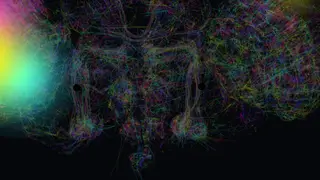
FutureBit introduced HashFly, a browser-based proof of concept that simulates a fruit fly brain to mine Bitcoin. It uses a small portion of the fly connectome's neurons to compute SHA-256 hashes. The company estimates a real organic neuron miner could run at 1 watt per terahash, outperforming the best 3nm ASICs by tenfold.
HashFly draws on Google's recently published MaleCNS v1.0 fruit fly connectome, activating only 2,914 of the dataset's 165,122 reconstructed neurons. These simulated photoreceptors interpret Bitcoin block headers, with PPL101 cells signaling when a double-SHA-256 target is reached. Users can adjust difficulty across six levels, though even the maximum remains far below real Bitcoin mining thresholds.
In testing, the browser miner achieved roughly 100 kH/s, starkly contrasting with FutureBit's Apollo III hardware at up to 18 TH/s. The 1 watt per terahash estimate derives from the fly's total power consumption, assuming all neurons could be repurposed for continuous hashing. FutureBit plans to expand the simulation to the complete neuron dataset.
This proof of concept could reshape discussions around computing efficiency, suggesting biological architectures may outperform silicon for specific workloads. If organic neuron mining scales as projected, energy-intensive industries like cryptocurrency could see dramatic power reductions. However, the gulf between simulated neurons and real biological tissue remains vast, and practical wetware systems are likely years away. Miners and hardware manufacturers may watch these developments closely, while researchers could gain insights into neuromorphic computing applications beyond blockchain.