Humanoid Robot End-of-Life Disposal Poses Complex Technical and Security Challenges
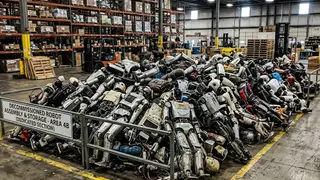
As humanoid robots approach mass production, their eventual decommissioning presents a multi-billion-dollar problem that remains largely unaddressed. Each unit contains 10,000 to 15,000 components, including motors, sensors, and semiconductor memory, making recycling a highly technical surgical process. Key risks include kinetic data breaches from stored proprietary information and thermal runaway hazards from lithium-based battery packs.
The decommissioning process demands a level of precision akin to microsurgery, with technicians manually disassembling hundreds of sealed drive modules and thousands of fasteners. Because bulk shredding would ruin the valuable neodymium magnets, each unit requires hours of careful extraction to preserve rare-earth elements for reuse. Additionally, the sheer volume of sensors and cabling means that even routine disassembly exposes workers to sharp edges and high-voltage components, necessitating specialized training and protective gear.
Beyond physical hazards, the financial scale is staggering. With projected production volumes reaching millions of units, the cumulative cost of safe disposal—including labor, specialized tooling, and secure data destruction—could rival the original manufacturing expense. Manufacturers are only beginning to explore design-for-recycling strategies, such as modular snap-fit joints and standardized battery bays, but these remain early-stage concepts.
The unaddressed disposal challenge could significantly affect manufacturers, recyclers, and end users. Companies may face hidden lifecycle costs that inflate robot pricing or deter adoption, while municipalities could struggle with hazardous waste streams. For businesses relying on humanoid labor, data security risks might undermine trust, especially in sensitive sectors like healthcare or logistics. However, proactive regulation and industry standards could transform this liability into a circular-economy opportunity, creating new skilled jobs and material recovery markets.