Button-Operated Implant Shows Early Success in Post-Prostatectomy Incontinence
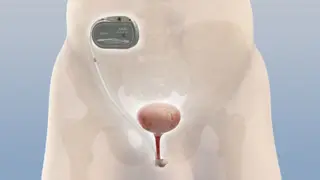
An investigational artificial urinary sphincter uses an external remote control instead of manual scrotal manipulation, potentially reducing patient discomfort. In a small French trial, all six recipients achieved at least a 50% reduction in daily pad weight, with average pad use dropping from 3.7 to 1.0 per day. A larger U.S.-French study has completed enrollment, with initial results expected next year.
The UroActive implant, roughly the size of a cardiac pacemaker, uses an electromechanical system to adjust pressure automatically and can be programmed to remain open for specific durations. Unlike conventional devices that require manual scrotal manipulation, patients operate it via an external remote, a feature that may reduce discomfort and stigma. In the French first-in-human study, all six men achieved at least a 50% reduction in daily pad weight at one year, with average pad use falling from 3.7 to 1.0 per day. No revisions or explantations occurred, and quality-of-life scores improved across all measured domains. The device requires several post-implantation office visits to fine-tune pressure settings, after which many patients reportedly need no pads or only a small liner. A larger 140-patient trial across the U.S. and France has finished enrollment, with primary results expected next year.
This device could shift how post-prostatectomy incontinence is managed, potentially easing psychological barriers for men who avoid existing implants due to the awkwardness of scrotal controls. If larger trials confirm the early efficacy and patient satisfaction, it may broaden acceptance of surgical options, improving quality of life for thousands. However, reliance on electronics and remote controls introduces new maintenance and adjustment demands, and long-term durability remains unproven. The technology’s success could also influence future design of implantable urologic devices, though cost and training may limit early adoption.