Regulators and industry grapple with defining autonomous vehicle safety benchmarks
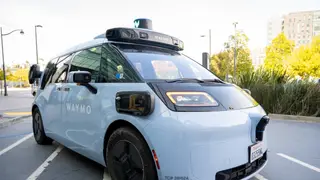
The article highlights the absence of standardized testing for autonomous vehicle safety, unlike the driver's license requirement for humans. NHTSA is developing a federal framework and has partnered with SAE to launch ASCEND, a government-industry initiative aimed at creating data-driven AV performance standards. The goal is to establish a federal competency standard that reduces inconsistent state and local regulations while encouraging innovation.
The ASCEND consortium marks a formal collaboration between NHTSA and SAE, a professional standards organization, to develop performance benchmarks for automated driving systems. Current federal safety rules require traditional equipment like steering wheels and mirrors, which vehicles such as the Tesla Cybercab and Zoox robotaxi lack, creating regulatory gaps. Administrator Jonathan Morrison stressed the need to avoid reactive "whack-a-mole" policymaking and instead build a forward-looking framework.
Separately, May Mobility's planned SPAC merger with ACP Holdings would value the company at $1.4 billion and raise over $300 million. The firm operates autonomous Toyota Siennas in three locations and would become the first US publicly traded company focused solely on robotaxi services, testing its partnership-based business model against competitors like Waymo and Aurora.
A federal AV competency standard could reshape how states regulate self-driving vehicles, potentially replacing the current patchwork of inconsistent local requirements. This may affect automakers, technology developers, and ultimately passengers who ride in autonomous vehicles. If standards are too strict, innovation could slow; if too lenient, public safety concerns may persist. The outcome could influence public trust in autonomous transportation and determine how quickly robotaxis and self-driving trucks become common on American roads.