Autonomous racecars make first road-course overtakes at Laguna Seca
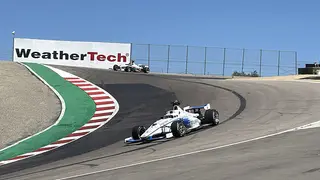
Unimore Racing from the University of Modena and Reggio Emilia won the Indy Autonomous Challenge at Laguna Seca, where autonomous vehicles overtook each other on a road course for the first time in the event's history. Nine university teams competed using AI driver software on identical AV-24 vehicles, with qualification held in a virtual simulation environment. The competition featured one-on-one heats where AI drivers made all passing decisions while human crews monitored safety.
The competition marked a shift from earlier IAC events, which since 2022 had been held exclusively on oval tracks. Last year's Monterey event featured single vehicles chasing fastest lap times, whereas this year's format paired vehicles in head-to-head heats. Each overtaking car had two laps to pass, then teams swapped positions with increased engine power limits.
All nine teams used identical AV-24 hardware—Dallara chassis, Honda engine, Luminar sensors, and NVIDIA GPU—making the AI software the sole differentiator. Qualification occurred months earlier in a D-Space virtual twin of Laguna Seca, a first for the competition. Teams are largely doctoral and master's students, and several alumni have since founded autonomous driving companies.
This event could signal how autonomous systems handle complex, dynamic decision-making under pressure. The overtaking maneuvers at Laguna Seca may inform broader autonomous vehicle development, particularly in edge-case scenarios where split-second judgments matter. Industries relying on automated transport—logistics, delivery, public transit—could benefit from advances proven in racing. However, the controlled environment differs from public roads, so real-world adoption may remain gradual. Students trained in this program may also shape future automotive innovation, though commercial impact will depend on translating race-proven algorithms into production systems.