Bison Puppet March in Manhattan Spotlights Tribal Restoration Campaign
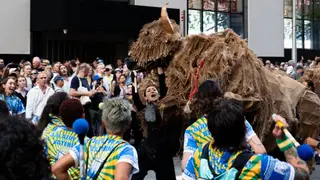
New York City hosted its first buffalo march, featuring 40 life-sized bison puppets and performances to honor the animal's cultural and ecological significance. Tribal leader Jason Baldes said reintroducing bison benefits Indigenous peoples and all Americans, citing their role in boosting biodiversity and soil health. The event follows recent legal disputes over bison grazing permits on public lands, with a court ruling in September allowing a conservation group's bison to continue grazing.
The march arrived amid a contentious legal backdrop for bison restoration. This summer, the Department of the Interior moved to revoke grazing permits held by American Prairie, a conservation group that maintains bison herds on public grasslands. A federal judge ruled in early September that the Bureau of Land Management could not block those animals from grazing, preserving a key foothold for restoration efforts on public lands.
Baldes's own work has progressed steadily despite political headwinds. The Wind River Tribal Buffalo Initiative herd now numbers nearly 200 animals, a decade after he first brought ten buffalo back to the Eastern Shoshone's territory. A planned $9 million expansion will add a 14,000-square-foot facility with meat-processing capacity and ecotourism space for travelers bound for Yellowstone.
This event could signal growing public engagement with Indigenous-led conservation models, potentially influencing how federal land managers weigh tribal interests against extractive uses. Urban visibility may build political support for restoration policies, though legal and administrative obstacles remain significant. The outcome could affect rural communities, tribal economies, and grassland ecosystems nationwide, as bison reintroduction touches questions of public land access, ranching livelihoods, and cultural sovereignty.