Intrinsic releases open-source robotics toolkit to accelerate application building
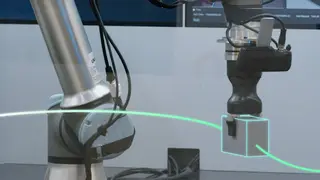
Intrinsic Innovation has launched Intrinsic Core, an open-source set of ROS-compatible capabilities for building robotic applications. The company says the toolkit reduces the need for teams to code foundational infrastructure from scratch, offering pre-configured building blocks for adaptive AI systems. Released under an Apache 2.0 license at ROSCon 2026, the software is available on GitHub and represents a long-term commitment to the developer community.
Intrinsic Core bundles control, pose estimation, motion planning, and grasp planning into a ROS-compatible environment. The control framework runs in real time and lets robots adjust mid-motion when sensors detect changes. Pose estimation relies on NVIDIA’s FoundationPose for 6 DoF part tracking, while motion planning auto-generates collision-free paths. Grasp planning adapts grippers to shifting part locations. The toolkit is released under Apache 2.0 and is available on GitHub, with Intrinsic positioning it as a durable commitment rather than a one-off code drop.
The company also introduced the Open Machine Tending Solution, an open reference design for CNC machine tending. Intrinsic claims teams often spend hundreds of hours building foundational robotics infrastructure from scratch; the toolkit aims to replace that with pre-configured blocks. Executives from both Intrinsic and the Open Source Robotics Foundation framed the release as a step toward making robot development significantly easier, citing the strength of the existing ROS ecosystem while noting gaps that Intrinsic Core seeks to fill.
This release could lower the barrier for small manufacturers and research labs that lack dedicated robotics engineers, potentially accelerating automation adoption in sectors like machine tending. By open-sourcing core components, Intrinsic may also shift industry norms toward shared infrastructure, reducing duplicated effort across companies. However, dependence on a single vendor’s design choices could create subtle lock-in, even with permissive licensing. The toolkit’s real-world impact will depend on how well it integrates with existing ROS workflows and whether the community builds lasting extensions around it.