Imagining a worst-case Yellowstone eruption: weeks of warnings then continent-wide disruption
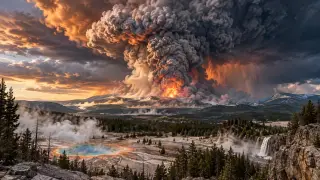
A Yellowstone super-eruption would likely follow weeks of escalating precursors, including seismic swarms and ground deformation. In a worst-case scenario, a VEI 8 blast would inject ash tens of kilometers high, generate deadly pyroclastic flows, and blanket large areas of the western United States. Such an event could cripple transportation, power, water, agriculture, and communications across much of North America, though it would not necessarily end humanity.
Yellowstone's monitoring network is extensive, combining ground-based seismometers with satellite imagery and gas sampling to track subtle shifts in the volcanic system. Scientists pay closest attention to earthquake swarms that migrate upward through the crust, since such patterns may signal magma or superheated fluids rising toward the surface. These precursors could provide weeks of advance notice before any major eruption.
The 631,000-year-old eruption serves as a reference point for worst-case scenarios. That event dispersed ash across much of North America and cooled global climate. A modern repeat would generate pyroclastic flows, blanket the western United States in ash, and disrupt transportation, power grids, water systems, agriculture, and communications continent-wide — though humanity itself would survive.
A Yellowstone super-eruption could affect nearly every American through cascading infrastructure failures — grounded flights, contaminated water supplies, and agricultural losses would ripple across the continent. While such an event remains highly unlikely in any given century, the article suggests that preparedness and monitoring systems could provide crucial advance warning, potentially allowing governments to mitigate some impacts. The broader lesson concerns how modern civilization's interconnected systems amplify the reach of natural disasters far beyond their immediate geographic footprint.