Global sea level rise accelerating, threatening cities, islands and heritage sites
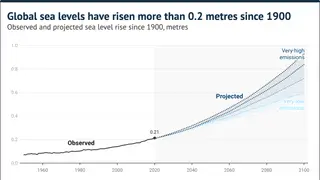
Sea levels are rising at their fastest rate in three millennia, driven largely by human activity, with about 770 million people living in areas acutely exposed to the impacts. The UN is set to adopt a declaration calling sea level rise an existential threat, noting it is already a lived reality for many. Projections show an additional 56cm of rise by 2100 under moderate emissions, affecting coastal cities, small island states, coral reefs and heritage sites.
The acceleration of sea level rise is tied directly to human activity, with the rate now exceeding any period in the last three millennia. The UN's upcoming declaration frames this not as a future threat but as a current reality for many, with the global average having already climbed 20cm since 1901. Thermal expansion and ice melt are primary drivers, though local factors like land subsidence alter the picture.
The acute risk zone encompasses 770 million people living below five metres above the high-tide line, including major Asian cities and entire island nations. Beyond direct flooding, rising seas elevate coastal water tables and amplify storm surges. A 12-fold increase in extreme sea level events since 1900 means infrastructure like water systems faces growing vulnerability, with marginalised communities often bearing the brunt of service disruptions.
The accelerating rise could fundamentally reshape coastal demographics, as repeated flooding and storm surges may render some areas uninhabitable. For the 770 million at acute risk, this may mean increased displacement and economic strain, particularly for low-income communities lacking resources to adapt. Small island nations could face existential challenges to their sovereignty and culture. The declaration's framing may spur international attention, but the practical impacts on infrastructure and daily life will likely be uneven, with the most vulnerable bearing the heaviest burden.