Prada’s Milan Megastore Blends Retail With Brand Heritage in Historic Galleria
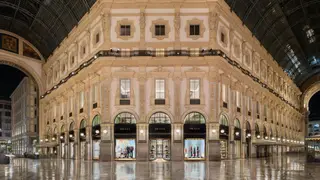
Prada has opened a sprawling eight-floor complex in Milan’s Galleria Vittorio Emanuele II, expanding its original 1913 location into a combined boutique and exhibition space. The site includes a permanent display called the Pradasphere, showcasing artifacts from the brand’s history, and connects separate womenswear and menswear sections via an underground passage. The project, overseen by Miuccia Prada, aims to immerse visitors in the label’s past, present, and future while offering a full range of products from leather goods to beauty items.
The Galleria Vittorio Emanuele II location carries deep significance for Prada, as it marks the exact spot where Mario and Martino Prada first opened their leather goods shop in 1913 under the name "Fratelli Prada." Miuccia Prada, who assumed leadership in the 1970s, personally directed the expansion project. The womenswear section occupies the original storefront and has grown to roughly twice its former size, while the menswear wing sits separately, joined by the Passaggio Segreto tunnel that doubles as a historical walkthrough.
Beyond merchandise, the complex layers in cultural programming. The Pradasphere exhibition requires advance registration and draws from the brand's archives alongside its collaborations across art, architecture, film, and sport. An invitation-only apartment space pairs German photographer Andreas Gursky's contemporary works with antique Italian furnishings styled after 18th-century interiors. The venue also hosted Vogue World shortly after opening, signaling its dual role as commercial hub and cultural landmark.
This hybrid retail-museum model could reshape how luxury consumers experience brand heritage, particularly for younger shoppers who increasingly value storytelling over mere product acquisition. Milan's tourism sector may benefit from a new anchor destination that draws visitors beyond traditional sightseeing, while competitors in the luxury space may feel pressure to elevate their own flagship experiences. The blend of commerce, art, and history could also influence how other heritage brands approach physical retail in an era of online shopping.