Metal detectorist uncovers 900-plus Roman silver coins in German field
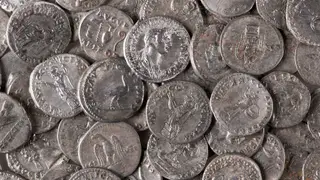
A metal detectorist found a hoard of more than 900 Roman silver denarii near Wesseling, Germany, weighing nearly 7 pounds. The coins span from 148 B.C. to about A.D. 124–125, with most dating to the Flavian emperors. The find is now displayed at the Rhineland Regional Museum in Bonn.
The hoard was discovered roughly a year before the announcement in a field near Wesseling, a few miles south of Cologne. Finder Oliver Riedl, a state-licensed detectorist, halted after recovering 15 coins, recognizing his equipment indicated a larger deposit remained. Regional archaeologists then excavated the full cache of 934 denarii, removing the surrounding earth as a single block for X-ray examination before opening it.
Erich Claßen, the regional archaeology director, suggested the original owner may have amassed most of the coins around A.D. 100 but buried them during Hadrian's reign, roughly two decades later. The oldest coin dates to 148 B.C., during the Roman Republic, while most were struck under the Flavian dynasty. The collection is now displayed at the Rhineland Regional Museum in Bonn.
The discovery could reshape public understanding of Roman presence along the Rhine frontier, offering tangible evidence of wealth circulation in the early empire. Museums may see increased visitor interest, while the case highlights the value of licensed detectorists working with authorities. It may also encourage more amateur archaeologists to report finds properly, potentially leading to further discoveries that enrich historical knowledge.