Lake Powell hits record low after dry winter
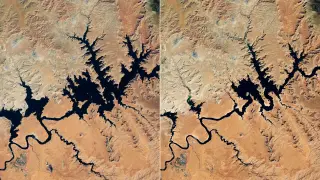
Lake Powell has fallen to its lowest level on record following a dry and warm winter that reduced snowpack in the Colorado River Basin. Satellite images show the reservoir's water surface at 3,517 feet in September 2026, below its previous record. Lake Mead also reached record lows, prompting emergency measures to stabilize water supplies for millions of people.
The September 2026 satellite reading placed Lake Powell's surface at 3,517.24 feet, below the prior April 2023 record of 3,519.92 feet. This decline followed a winter of sparse snowfall and unusual warmth in the Upper Colorado Basin, sharply curtailing the spring melt. A 2017 comparison image shows the reservoir near a decade-high level.
To counter the drop, the Bureau of Reclamation diverted water from Flaming Gorge Reservoir and cut downstream releases to Lake Mead, which also hit a record low in August. The agency canceled a planned April "controlled flood" meant to rebuild sandbars. These steps highlight the strain on a system serving over 40 million people and roughly five million acres of farmland.
The record lows could force hard choices for water managers and the tens of millions who depend on the Colorado River. Reduced hydropower output may raise electricity costs or strain grids, while agricultural users could face tighter allocations, affecting food prices. The emergency releases from Flaming Gorge are a temporary buffer, and without sustained snowpack, cities and farms may need to adapt to a more arid baseline.