Airbus repurposes Valve's handheld PC as command console for ExoMars rover tests
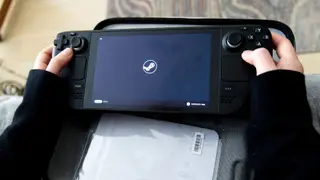
Airbus engineers are using a Steam Deck handheld PC to remotely operate a prototype of the ExoMars rover during development and testing on Earth. The device runs custom software and leverages its physical controls, touchscreen, and wireless connectivity to guide the rover in a Mars-like environment. The rover is designed to be autonomous once deployed on Mars, but the Steam Deck provides a practical manual control interface for engineers now.
The Steam Deck's appeal for Airbus lies in its versatility as a full Linux-based computer wrapped in a familiar game controller form factor. Engineers can run custom command software while using thumbsticks, triggers, and face buttons for precise maneuvering, with Wi-Fi and Bluetooth enabling wireless operation across the test facility. The device's touchscreen adds another layer of control flexibility.
The ExoMars rover, destined to be named Rosalind Franklin, is slated for a 2030 Mars landing. Airbus's Stevenage team is simultaneously developing the landing platform's mechanical, thermal, and propulsion systems. Kata Escott, managing director of Airbus Defence and Space UK, described the mission as the culmination of more than twenty years of work, with the Steam Deck playing a supporting role in the platform's Earth-bound development phase.
This story could signal a broader shift toward using consumer off-the-shelf hardware in specialized engineering contexts, potentially lowering costs and accelerating development cycles for aerospace and robotics firms. It may also inspire hobbyists and smaller organizations to experiment with accessible technology in serious applications. However, the practical impact on society remains modest, as the Steam Deck's role is confined to terrestrial testing; the actual Mars mission depends on autonomous systems, meaning the device's influence is largely symbolic of how commercial products can unexpectedly serve high-stakes industries.