Ancient Egyptian Fort Yields Horse Burial and Carving of Bound Libyan Captive
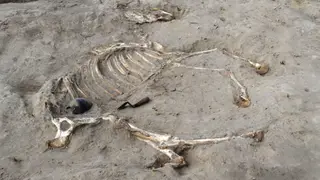
Archaeologists working at the Abqaa' site in Egypt's western Nile Delta uncovered a horse burial dating to the New Kingdom, likely a ceremonial interment of a military animal. The fort also produced a stone tablet showing a captured Libyan prisoner from the Meshwesh tribe, along with hieroglyphic references to pharaohs Ramesses II and Merneptah. These finds shed light on Egypt's defensive operations against western tribes and its ceremonial practices.
The horse skeleton, a young medium-sized male, was found within the fort's walls alongside harness fittings, suggesting it was a working military animal given a deliberate, ceremonial interment. Complete horse skeletons from Pharaonic Egypt are exceptionally rare, making this specimen valuable for studying equine use in ancient military contexts.
The fort at Abqaa' functioned as a defensive outpost against Libyan tribes during the New Kingdom. The carved prisoner, bound and depicted in a submissive posture, represents the Meshwesh people, while tablets naming Ramesses II and Merneptah help date the fortress's occupation and connect it to broader dynastic military campaigns.
This discovery could reshape scholarly understanding of ancient Egyptian military logistics and ceremonial practices, particularly regarding how horses were valued and honored. The rare skeletal remains may allow researchers to study equine health, breeding, and training methods. For the public, such finds humanize ancient civilizations and may stimulate interest in Egyptology, potentially influencing museum exhibits and educational programming. The prisoner depiction also offers historians a tangible artifact for examining how Egypt portrayed its western adversaries.