Excavation under Paris hospital finds traces of a Celtic settlement razed in Caesar's Gallic Wars
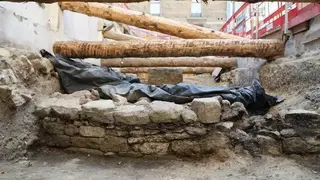
Archaeologists working in a courtyard of a Paris hospital have discovered the remains of a Celtic fortification, including a wall with signs of intense burning. The find is thought to be Lutetia, the capital of the Parisii tribe, which Julius Caesar's forces besieged in 52 B.C. According to historical accounts, the Gauls set fire to their own town and destroyed bridges to deny it to the Romans, which matches the evidence of fire found at the site.
The excavation at Hôtel-Dieu, Paris's oldest functioning hospital, uncovered a 65-foot wall built with large stone blocks and interlocking timber beams—a hallmark of Gallic defensive construction. Carbon-14 analysis of wooden elements placed the structure between 200 and 10 B.C., while a Gallic spearhead discovered at the wall's base reinforced the military context.
The find resolves a long-standing debate about Lutetia's precise location. Caesar's account described the Parisii burning their own settlement and severing bridges to prevent Roman capture. The charred facing, burnt seeds, and destroyed wooden building align with that historical narrative, providing material confirmation of events recorded more than two millennia ago.
This discovery could reshape public understanding of Paris's pre-Roman heritage, offering tangible evidence of a pivotal moment in European history. It may draw increased attention to urban archaeology and the preservation of sites beneath modern cities. For historians and educators, it provides a concrete anchor for teaching about the Gallic Wars and Celtic civilization. The find could also boost cultural interest in the Île-de-la-Cité, prompting renewed discussion about how ancient conflicts are remembered and interpreted.