Brazil's election could decide whether Amazon deforestation accelerates or slows
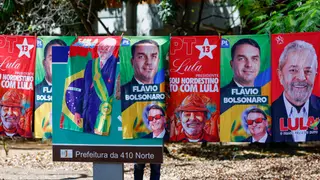
Brazil's October 4 general election pits President Lula against Flávio Bolsonaro, son of the former president. Experts warn that a Bolsonaro victory could lead to accelerated Amazon deforestation, as his father's term saw deforestation reach a 15-year high. The rainforest's role in global climate makes the outcome critical.
During Jair Bolsonaro's tenure, annual forest loss jumped from roughly 7,500 to over 11,500 square kilometers, a 15-year peak. Under Lula's current administration, enforcement has cut that figure nearly in half, down to about 5,700 square kilometers in the latest annual measurement.
Flávio Bolsonaro has a history of questioning climate science and backing legislation seen as weakening native vegetation protections. His campaign promises zero illegal deforestation by 2029, yet Indigenous groups and scientists fear a return to permissive policies, including opening reserves to mining. The Amazon's 4.2 million square kilometers are vital for global carbon storage.
The outcome could significantly influence global climate stability, as the Amazon's carbon stores and rainfall patterns affect weather across continents. A Bolsonaro victory may reverse recent enforcement gains, potentially accelerating deforestation and pushing the forest closer to a tipping point. This would disproportionately impact Indigenous communities and local livelihoods, while also raising global emissions. Conversely, a Lula win may sustain current reductions, though economic pressures remain. The decision ultimately shapes whether the region's ecological collapse becomes more probable.