Cartoonist's playful take on cell aesthetics
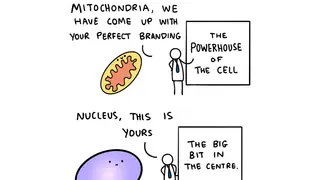
This week's New Scientist cartoon by Twisteddoodles humorously explores the idea of improving a cell's appearance. The artwork likely pokes fun at laboratory practices or biological imagery. No further details are provided beyond the cartoon's theme.
This week’s New Scientist feature pairs a cartoon by Twisteddoodles with a playful premise: what if scientists could “improve” a cell’s appearance? The humor likely draws on the gap between the messy, functional reality of laboratory biology and the clean, stylized images used in textbooks and papers. By anthropomorphizing cells or exaggerating their features, the cartoon may gently mock the aesthetic choices researchers make when presenting data. It also touches on the broader cultural fascination with visualizing the invisible, where scientific accuracy often yields to artistic license for clarity or appeal. Without further details, the piece stands as a lighthearted reminder that even serious lab work has room for whimsy.
This cartoon could resonate with researchers and science communicators, who may see their own practices reflected in the joke—prompting reflection on how they depict biological structures. For general readers, it may humanize cellular biology, making it feel more approachable and less intimidating. The humor could also subtly reinforce the idea that science is not purely rigid, but creative and iterative. Its impact is likely modest, offering a moment of levity that might encourage curiosity about what cells actually look like versus how they are drawn.