EU Draft Shifts Hydrogen Strategy from Binding Quotas to Credit System
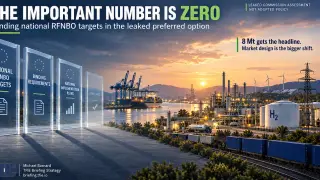
A leaked European Commission impact assessment suggests replacing binding national renewable hydrogen consumption targets with an indicative EU-wide target and a credit mechanism. The draft also models a wide range of hydrogen consumption scenarios for 2040, from 8 to 20 million tonnes. This indicates a shift in how the EU plans to stimulate demand for renewable hydrogen after 2030.
The draft's central scenario projects 18 million tonnes of electrolytic hydrogen consumption by 2040, with a low case of 8 million tonnes requiring roughly 340 TWh of renewable electricity — about 335 TWh less than the central pathway. The assessment notes that reduced electrolysis demand could lower electricity prices and free up clean power for direct use.
The current Renewable Energy Directive mandates RFNBOs reach 42% of industrial hydrogen use by 2030 and 60% by 2035. The leaked preferred option would replace binding national quotas with an indicative EU-level target, financing measures, and a credit mechanism, though the document remains a draft with placeholders ahead of a legislative proposal expected before end of 2026.
The shift from binding quotas to a credit system could reshape which hydrogen applications receive policy support across Europe. Industries currently planning around mandated RFNBO shares may face uncertainty, while electricity-intensive sectors could benefit if lower prescribed hydrogen consumption frees renewable generation for direct use. The outcome may influence electricity prices, industrial investment decisions, and the pace of decarbonisation, affecting manufacturers, energy consumers, and climate goals alike.