Tropical trees evolved multiple paths to water-saving photosynthesis
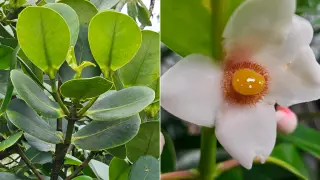
Researchers compared three Clusia species to trace how CAM photosynthesis arose. Ancient genome duplications and genetic reshuffling produced distinct strategies, from strong CAM to stress-triggered forms. The findings could inform drought-resistant crops.
The three Clusia species examined—rosea, minor, and major—each carry a doubled genome from an ancient polyploidization event. Over millions of years, that duplication was followed by diploidization, during which gene copies were lost, silenced, or repurposed. This reshuffling produced distinct photosynthetic outcomes: some species rely on strong CAM, while others switch to CAM only under stress or blend both strategies.
The genus stands out because it contains the only known trees using CAM photosynthesis. Alexander von Humboldt first noticed the anomaly around 1800 when a Clusia leaf failed to produce oxygen bubbles in sunlight. The mechanism—nocturnal CO₂ uptake stored as malic acid—is well understood, but the evolutionary pathway has now been traced through genome comparison and functional measurements.
This research could inform agricultural breeding programs seeking drought-resistant crops. If the genetic mechanisms behind CAM can be transferred or activated in food plants, farmers in arid regions may gain varieties that conserve water without sacrificing yield. The findings also deepen understanding of how complex traits evolve through genome duplication, which may guide future bioengineering efforts. However, translating insights from tropical trees to crop species remains a long-term prospect requiring further validation.